
EHS Management Policy
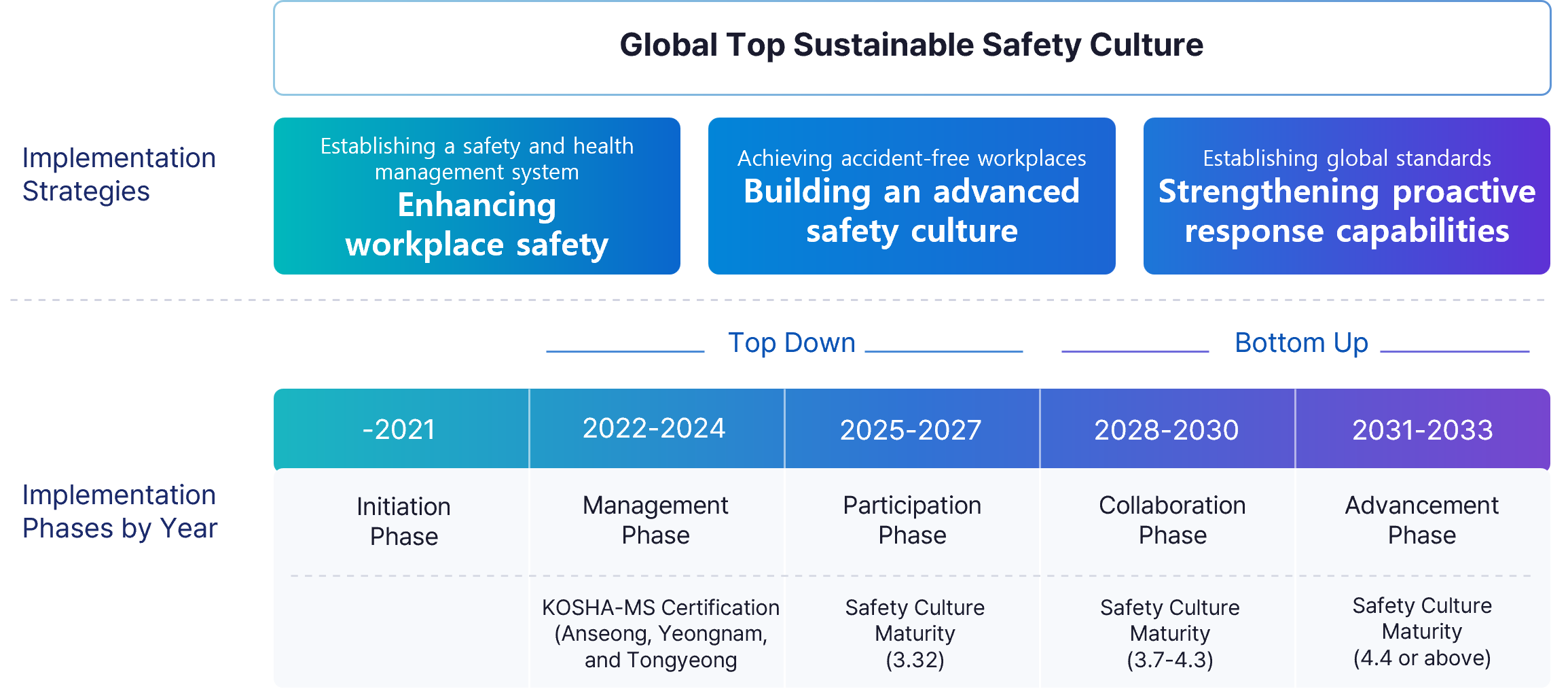
Under the mission of establishing a “sustainable and global safety culture,” Dongsung Finetec aims to achieve accident-free workplaces and
promotes three key strategies-aligning with global standards, adopting and implementing a safety culture, and strengthening workplace safety management-to create safe working environments. Based on these strategies, Dongsung Finetec has established and operates a safety and
health management policy to implement a safety and health management system applicable across all processes.
Place the safety and health of workers as the highest value and establish, maintain, and manage the best environmental, safety,
and health management system.Provide safety and health education to enhance the environmental, safety, and health knowledge and raise awareness levels of all members and stakeholders, with active participation by all members.
Establish a safety, health, and environmental management system that identifies and improves hazards and risk factors in all
workplaces in advance, measures the performance, and maintains and manages it continuously.Prevent industrial accidents by listening to employees’ opinions, encouraging active participation, and strictly complying with laws
and safety rules.Prohibit the use of drugs, alcohol, and prohibit driving or working under the influence. Actively promote safe working environments by checking health conditions and hazardous or risk factors before work during TBM (Tool Box Meeting) activities.
Identify and assess environmental aspects and impacts, pursue continual improvement, comply with applicable domestic and
international environmental laws, regulations, and conventions, and strive to exceed their requirements.
Direction and Goals
In alignment with the Dongsung Group’s safety and health strategy framework, Dongsung Finetec derives detailed tasks for each workplace to prevent safety accidents and promote effective improvements.
[Dongsung Finetec Safety and Health Strategy Framework]
[2025 Safety and Health Management Goals]
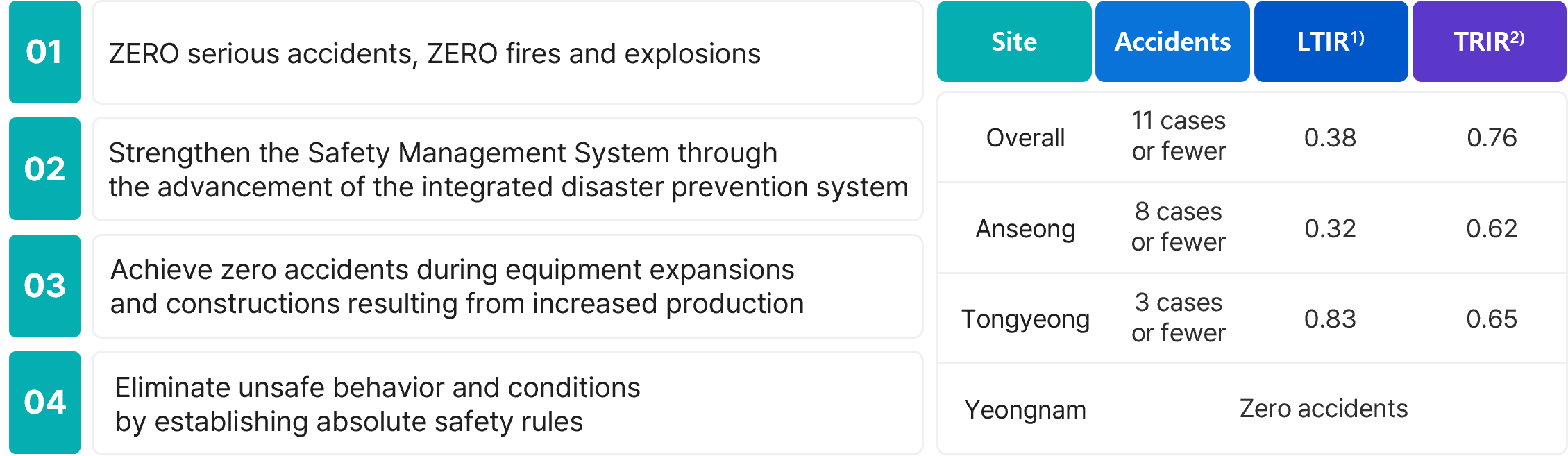
1) LTIR (Lost Time Injury Rate): Number of injuries resulting in at least one lost workday per 200,000 working hours
2) TRIR (Total Recordable Incident Rate): Total number of recordable incidents per 200,000 working hours
Performance
Smart Integrated Disaster Prevention Solution
Dongsung Finetec has established STELLA, a smart integrated disaster prevention solution, to
monitor and manage fire, environmental, and safety risks across our workplaces in real time.
STELLA, embodying its namesake's meaning 'star of the sea,' is an integrated control system that
supports safe operations even in emergency situations. Following the launch of a dedicated task
force and technical reviews in 2023, we developed the integrated software and emergency
broadcasting system in 2024 and officially commenced full-scale operation. The system
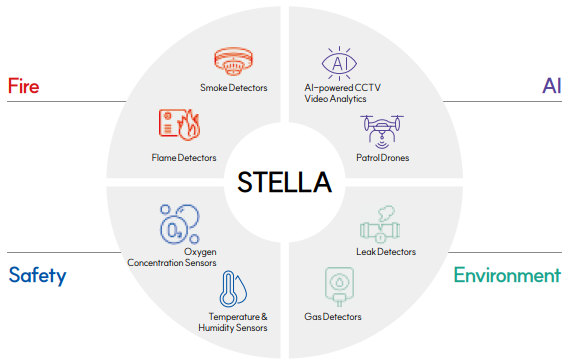
integrates a wide range of sensors—including flame and smoke detectors, AI-powered CCTV
video analytics, patrol drones, gas and leak detectors, oxygen concentration sensors, and
temperature and humidity sensors—to monitor fire hazards and hazardous substance leaks in
real time. When abnormal conditions are detected, alerts are immediately issued via text
messages and voice calls to enable a rapid response. We have also established an integrated
monitoring system connecting our Anseong, Tongyeong, and Yeongnam sites. Going forward, we will continue to enhance STELLA by introducing thermal imaging drones, integrating air emissions monitoring systems, and advancing its smart safety management capabilities.
[STELLA Integrated Sensor Network]
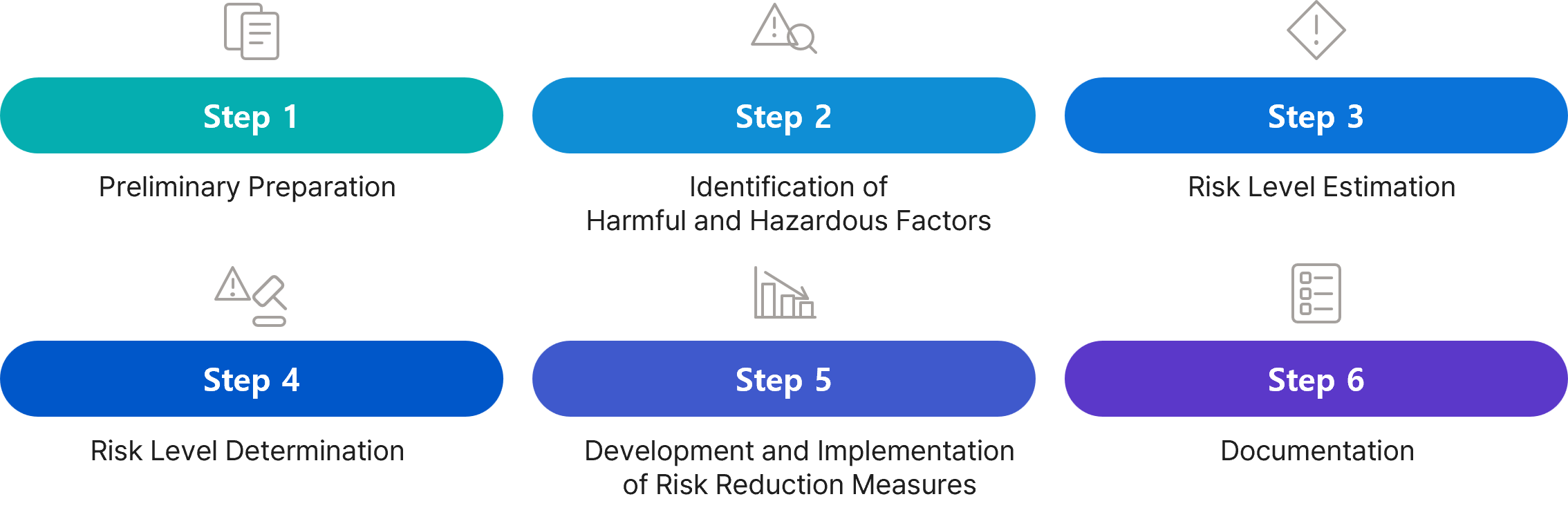
Safety and Health Risk Assessment
Dongsung Finetec conducts risk assessments-including initial, ad-hoc, and regular assessments-according to the Occupational Safety and
Health Act and related regulations. Initial and regular assessments cover all processes. Regular assessments are conducted annually to review equipment deterioration, worker replacement, incorporation of new safety knowledge, and the effectiveness of existing measures. Ad-hoc
assessments are performed whenever new risk factors arise, including installation or modification of structures, introduction or modification of equipment and materials, maintenance, changes in working methods, or work performed by suppliers. If a serious accident occurs, an
assessment is conducted before resuming work. Depending on departmental characteristics, production-related departments apply the KRAS method, office departments apply the checklist method. And chemical-handling processes undergo separate chemical risk assessments.
[Risk Assessment Process]
Worker Participation Safety and Health Program
We promote near-miss reporting and safety improvement activities through active employee participation. In 2025, a total of 91 improvement
suggestions were submitted. Of these, 65 have been implemented, while the remaining 26 are currently under review and being addressed. By identifying and addressing potential hazards proactively, we reinforce a safety-focused culture and enhance accident-prevention outcomes.
We also operate various communication channels-including the Industrial Safety and Health Committee, supplier contractor councils, and
worker meetings-to gather opinions from employees and contractor personnel and support them in presenting safety and health proposals
directly. Collected opinions are reflected in deliberating industrial safety and health matters and developing workplace safety measures.
Council Unit | Role | Frequency |
|---|---|---|
Occupational Safety and Health | Deliberates and resolves major matters | Once per quarter |
Supplier Council | Discusses accident-prevention measures | Once per month |
Worker Meeting | Collects feedback from the workplace | Once per week |
Safety and Health Education
Dongsung Finetec provides monthly safety and health education by inviting external professional instructors to enhance onsite workers’ safety and health awareness. The training focuses on
common accident cases and safety rules tailored to each type of hazard. To enhance the expertise of supervisors responsible for managing and overseeing production sites, we provide job-specific
training conducted by professional instructors. The program combines theory and practical
training on supervisors’ core responsibilities and emergency response methods to continuously
strengthen their capabilities. Additionally, during daily pre-work briefing sessions, we conduct TBM (Tool Box Meeting) activities to share potential hazards in advance and reinforce safety rules
before work begins.
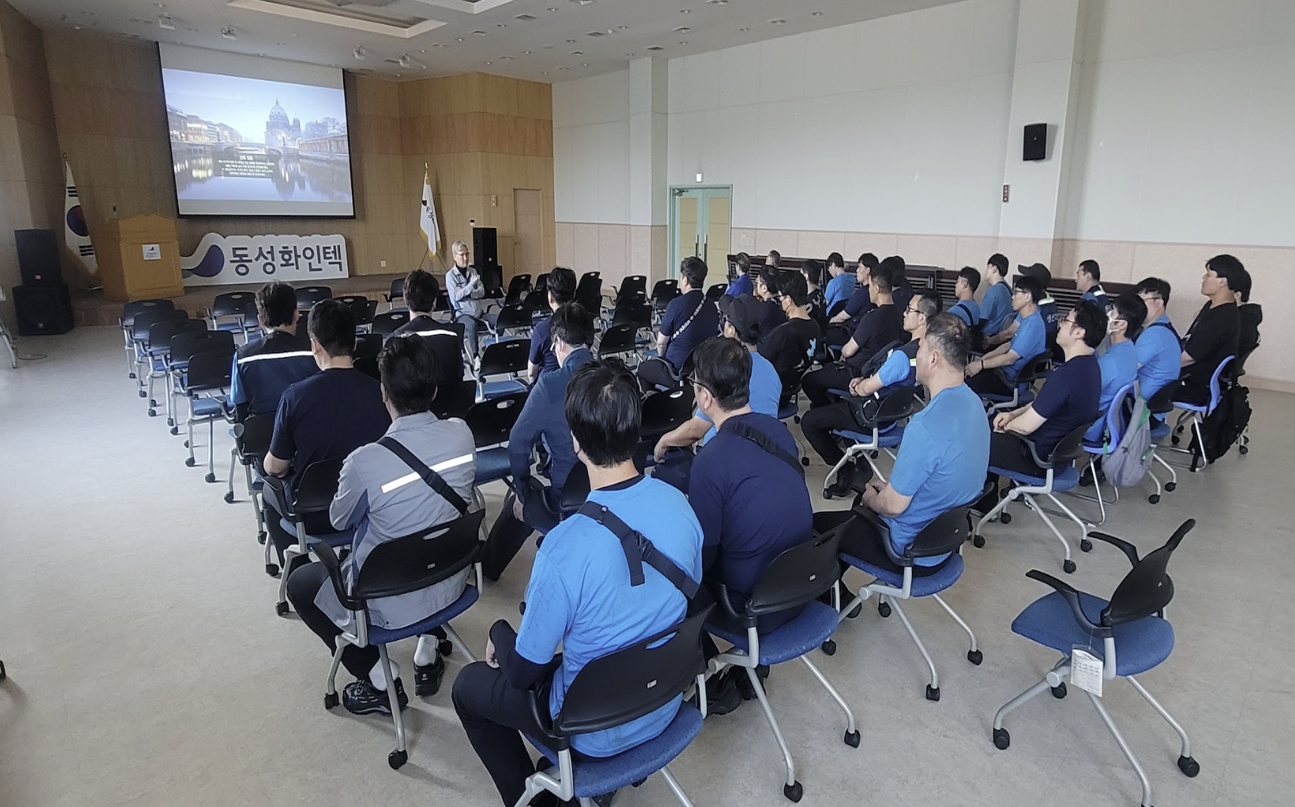
(Accident Case Study Training)
Joint Emergency Response Drills at Business Sites
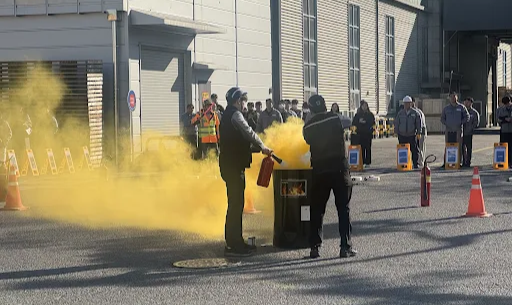
Dongsung Finetec conducts monthly emergency drills to ensure the safety of employees and
contractor workers. Fire scenarios within the workplace are primarily used to simulate realistic
emergencies and evaluate the effectiveness of our response system. Drills are operated centrally
by the company’s Integrated Control Room and led by the internal fire brigade of each plant. We
also deploy the company’s fire truck to create an environment similar to real emergencies, thereby
strengthening onsite response capabilities. Contractor workers also participate to enhance joint
response capabilities, and joint drills are conducted semiannually with local fire departments to
evaluate external cooperation sand real-world response capabilities.