

Double Materiality Assessment Process
Dongsung Finetec conducted a double materiality assessment in accordance with the GRI (Global Reporting Initiative) Standards 2021's
reporting-topic selection principles and assessment methodology to identify key sustainability management issues. This approach evaluates
the overall impact of our business activities on the environment and society while also assessing the potential impact that external ESG-related factors may have on our business operations and financial position. Through this process, we set issue priorities and derived material topics as well as reporting topics.
[Double Materiality Assessment Process]
Step 1. Form Issue Pool | Step 2. Impact Analysis and Priority Assessment | Step 3. Derive Material Topics | |
|---|---|---|---|
| Environmental and Social Impact
| Financial Impact
|
|
Double Materiality Assessment Results
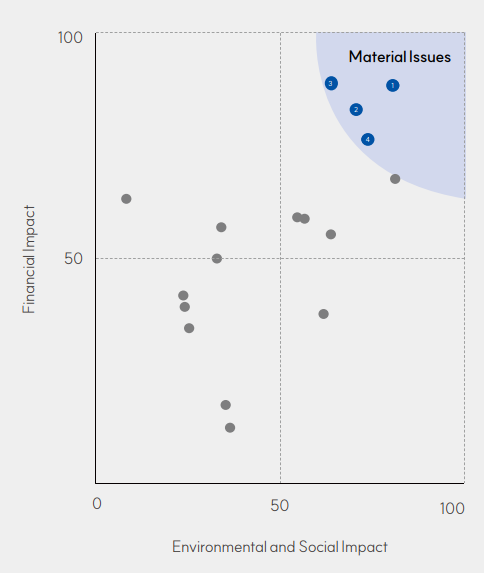
Based on a comprehensive analysis of the environmental and social impacts and financial impacts of the 17 basic ESG issues of Dongsung Finetec, a total of four material topics were identified in the following order: strengthening safety and health, supply chain management, climate change, and corporate ethics and compliance
[2025 Assessment Result Matrix]
Rank | Category | Issue |
|---|---|---|
1 | S | Strengthening Safety and Health |
2 | G | Supply Chain Management |
3 | E | Climate Change Response |
4 | G | Corporate Ethics and Compliance |
5 | E | Waste Management |
6 | E | Pollutant Management |
7 | S | Product Quality and Reliability Assurance |
8 | S | Labor Practices Assurance |
9 | E | Energy Consumption Management |
10 | G | Sound Governance |
11 | S | Talent Acquisition and Development |
12 | S | Enhancing Information Security |
13 | S | Respect for Workforce Diversity |
14 | G | Human Rights Management |
15 | S | Stakeholder Engagement |
16 | E | Biodiversity Conservation |
17 | S | Community Contribution |